
Platform
Built by our historians. Yours to run.
Every Frame 44 exhibit is researched, written and built by our team — then handed to yours. Atlas is the map platform underneath it. Studio is where your staff edit it.
Frame 44 Atlas
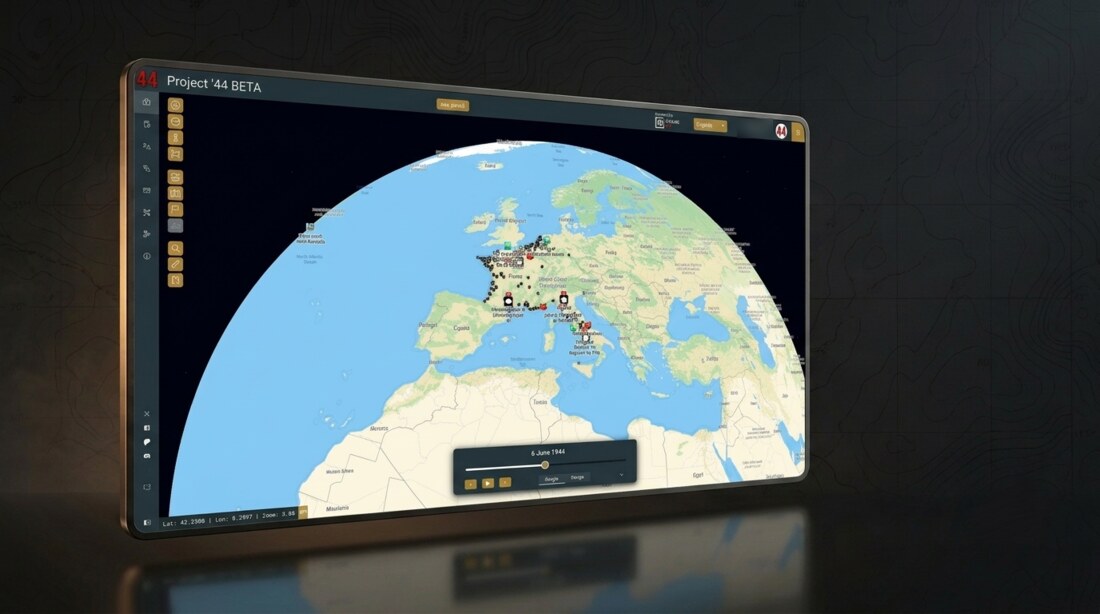
The map platform underneath every exhibit — the map engine, the historical record, and the infrastructure that keeps a public screen running. You don't buy Atlas separately; every Studio runs on it. It's the engine of everything.
- The map engine your exhibit runs on — the same one behind Project '44
- Historical and modern basemaps, 3D terrain and satellite imagery, with full pitch, zoom and rotate
- A date that moves — front lines and unit positions where that applies, other kinds of change where it doesn't
- Ingests what you have — war diaries, source documents, published histories — searchable and linked to the map
- Hosting, content sync and backups
- Offline runtime for gallery screens, with monitoring and support on every screen we install
Your authored content is yours regardless of what you're licensing in a given year.
Frame 44 Studio
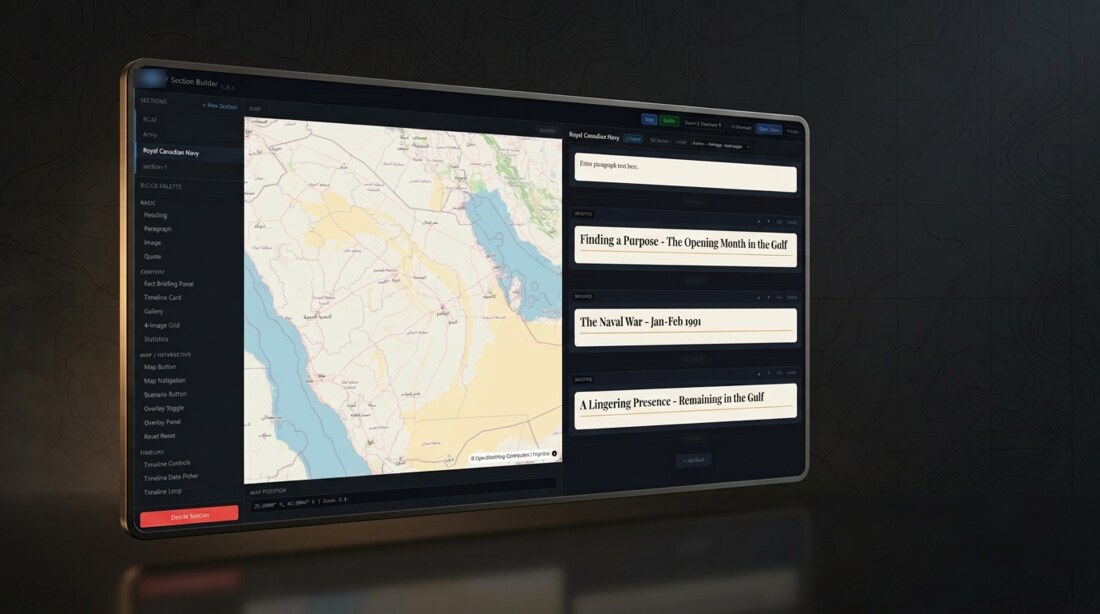
The block-based builder your own staff use to assemble and edit each exhibit — no coding, no developer on standby.
- Headings, fact panels and timeline cards
- Photo and document galleries
- Map buttons, overlay toggles and scenario buttons
- Chapter-by-chapter map-story structure — the guided path a visitor follows
- Themes that match your institution's look
- One-click publish — gallery screen and web at the same time
Studio comes in three tiers — Studio 1, 3 and 5 — sized by how many exhibits you publish, not by how much you can build inside one. Move up at any time.
Gallery screens
Kiosk software built to run in a museum, not an office. It runs offline on secure networks, syncs new content when it's connected, and we monitor every screen we install.
Hardware is yours to buy. We give you the exact specification and set everything up remotely — we don't resell hardware.
Web exhibits
The same exhibit your visitors touch in the gallery also runs on your museum's website. Built once, published to both, with no second round of authoring.
Web exhibits can also take contributions back in — crowd-sourced photographs, corrections to war diary transcriptions, and community mapping, all moderated by your staff — available as an optional add-on. Admins can create content straight from the web and publish it to the website and gallery screens together.
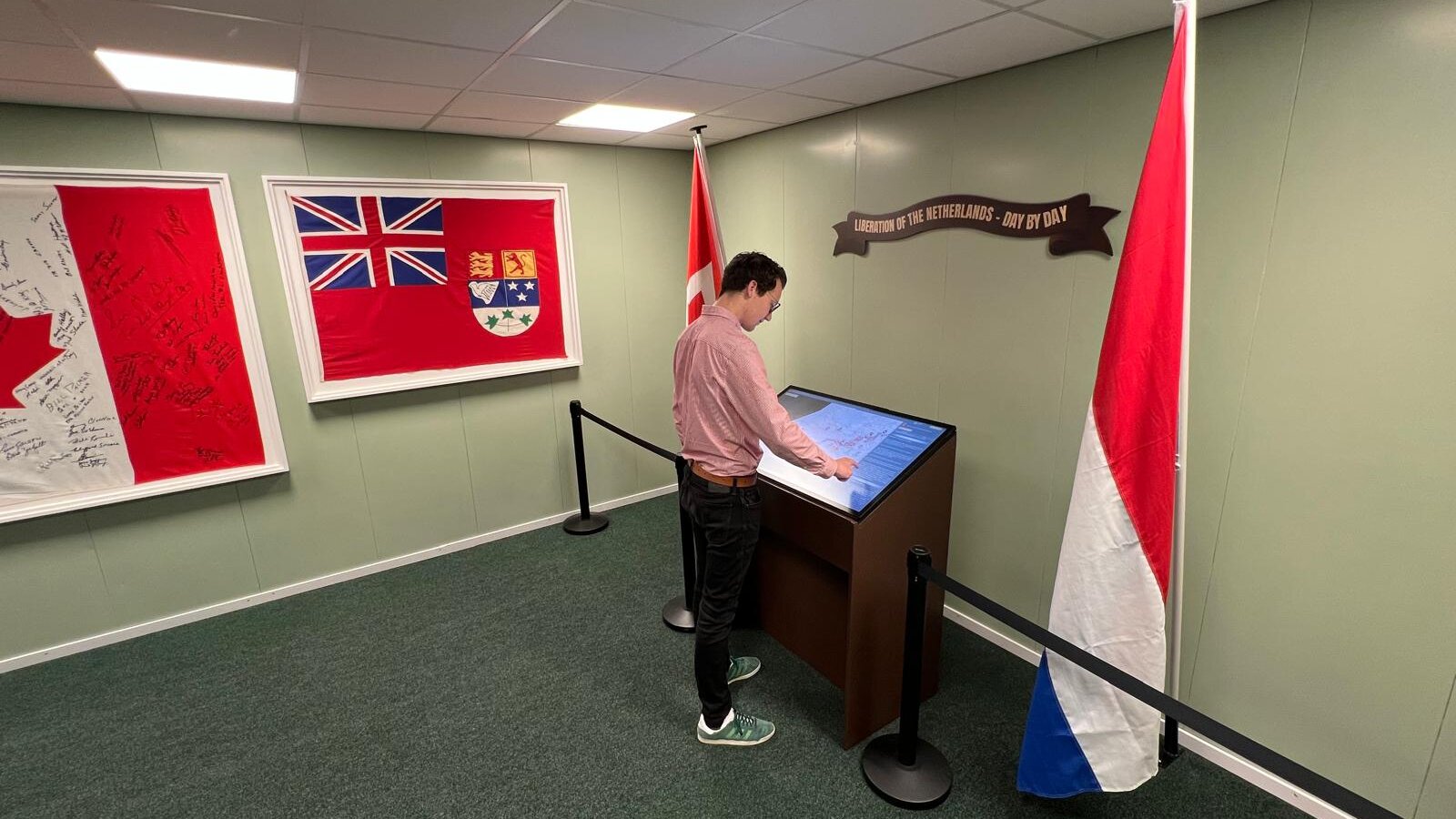
Our screens have run daily since April 2026 at the Victory Museum in Grootegast and the Holten Canadian War Cemetery visitor centre in the Netherlands.
You shouldn't need a developer to fix a typo
Once an exhibit is built, your staff can make the everyday edits themselves — update text, swap photographs, adjust map overlays and publish the change the same afternoon, no ticket and no invoice for a caption. For anything bigger — new chapters, new data, new collections — our team is who you turn to, and that's what your yearly plan keeps on standby.
Your authored content is yours permanently. Text, photographs, chapter structure — exported in standard formats any time.
The exhibit on your gallery screen keeps running as it was built. What your yearly plan and your data licences keep alive is everything that makes it current — the living archive behind it, new material as that archive grows, content sync, monitoring and support.
What you're licensing
Every installation is one Studio, the exhibits that run on it, licences for the historical records they draw on, and a yearly plan that keeps it all current. Cloud hosting is included; secure and offline sites can run Atlas on-premise, inside your own firewall.
Built to outlast a budget cycle
Museums think in decades. So does the way this is built.
Your exhibit runs, whatever happens to the paperwork. Once it's installed, the exhibit on your gallery screen keeps running exactly as it was built — the story, the map, the photographs, the mapped positions composed into it. We don't switch off museum screens.
The yearly plan is what keeps it a living thing. With an active plan your staff edit it, add chapters, swap photographs and build new exhibits in Studio — and we host it, monitor it, patch it and answer when something's wrong. Let the plan lapse and the exhibit keeps running, but Studio closes: no new edits and no new exhibits until you're back, and the hosted web version comes down, because that's the hosting you were paying for.
Your data licence keeps the archive alive behind it. While it's active, your exhibit draws on the living archive — new war diary pages, corrections and new positions as Project '44 grows — and you can open any unit in your collection to build the next exhibit. Let it lapse and your installed exhibit still shows what it was built with; what pauses is the growth and the reach beyond it.
Coming back is simple. Resume your plan and everything picks up where it left off — nothing lost.
For secure and offline installations, a perpetual on-premise licence keeps your screen running independently of anything you pay us in a given year.
Long-term continuity and ownership are set out in full in your paperwork.
Every installation starts with a conversation
We'll scope your exhibit and price it to your funding — no obligation.